







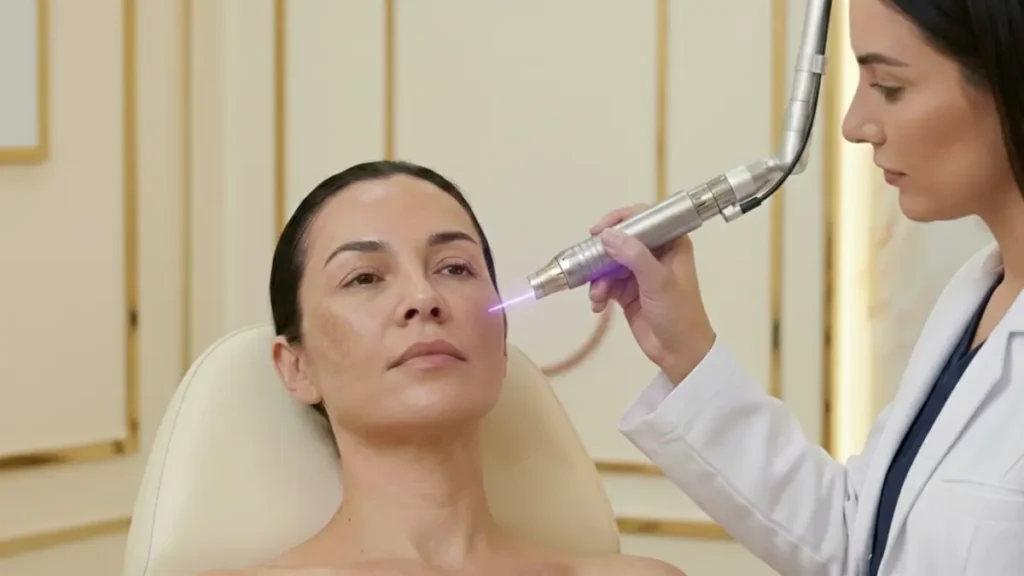
Melasma can be frustrating to live with, especially for people who are highly conscious about their appearance. The dark patches it creates on the skin can lower some people’s confidence and even put them into extreme emotional turmoil.
For those new to melasma, it’s a skin condition that causes dark, blotchy spots and patches on the skin, particularly on the face and other exposed areas. While the market offers numerous creams and other topical medications for melasma, they don’t always generate the desired results. It is where pico laser treatment can help people.
If you’re dealing with stubborn melasma patches, you must consider pico laser treatment for visible results. We’ve created this comprehensive guide on ‘pico laser for melasma,’ so you’re aware of what you’re opting for. Ensure you read the full blog to gain clarity.
What is Pico Laser Treatment?
Pico laser is a non-invasive skin treatment that uses ultra-short bursts of energy delivered in picoseconds (trillionths of a second) to treat melasma. There are other laser treatments as well, but they rely heavily on heat to destroy pigmentation.
In contrast, a pico laser uses rapid pulses that generate a photoacoustic effect. It means the laser energy shatters pigment particles into tiny fragments without heating or damaging the surrounding skin.
Since melasma involves excess melanin production, breaking pigment into smaller particles allows the body’s natural processes to clear it gradually. It’s why the pico laser for melasma is growing in popularity worldwide.
Who Should Take Pico Laser Treatment?
Since the pico laser is a safe, non-invasive treatment, most people can undergo it after their dermatologists’ approval. Pico laser for melasma is generally recommended for people who
- Have persistent or recurrent melasma despite using topical creams
- Have medium to deeper skin tones prone to post-inflammatory pigmentation
- Have mixed or dermal melasma that is difficult to treat with creams alone
- Are committed to stricter sun protection and long-term skin care
However, it’s not suited for individuals with active skin infections, uncontrolled hormonal triggers, and certain inflammatory skin conditions. A proper dermatological assessment can help you determine your suitability for this treatment.
Why is Pico Laser Considered the Best Treatment for Melasma?
Now that you’re aware of what the pico laser for melasma treatment exactly is, let’s explore why it has become a preferred option for many dermatologists and patients. Much of its effectiveness and popularity stems from the following reasons.
It Targets Pigment without Excess Heat
One of the biggest challenges in treating melasma is that heat can worsen it. People who take traditional Q-switched laser treatment often complain of rebound pigmentation because this treatment generates significant thermal energy.
Pico laser, by contrast, uses extremely short pulses that rely more on mechanical pressure than prolonged heat. This precision minimizes thermal damage to surrounding skin.
Since melasma-prone skin is highly reactive, reducing heat exposure lowers the chances of triggering further pigment production. This safety profile is one reason why the pico laser for melasma is considered the best available treatment.
Breaks Pigment into Finer Particles for Better Clearance
The ultra-short pulse duration applied during treatment allows the pico laser to fragment melanin into much smaller particles than traditional lasers. The body’s immune system can easily clear these smaller particles more efficiently.
It leads to gradual skin lightening without aggressively stripping the skin. For many patients, this results in more even-toned fading rather than patchy improvements. Once you complete the recommended number of pico laser sessions, you can notice increased brightness and a reduction in stubborn pigmentation.
Lower Risk of Post-Inflammatory Hyperpigmentation (PIH)
People with medium to deeper skin tones, especially those living in sunny regions, are more prone to post-inflammatory hyperpigmentation (PIH). Even minor irritation can lead to darker patches.
Since the pico laser for melasma delivers significantly less thermal energy than traditional laser treatments, the risk of PIH is reduced when performed correctly. This makes it particularly suitable for Fitzpatrick skin types III to V. While no laser is entirely risk-free, pico laser’s gentler approach makes it safer for pigmentation-prone skin.
Gradual, Controlled Results Reduce the Risk of Rebound
Melasma tends to relapse if treated too aggressively. Hence, if you’re considering treatments that produce rapid, intense peeling or inflammation, then you should not overlook the risk of rebound hyperpigmentation.
A highly effective way to help prevent rebound pigmentation is to choose a treatment that provides gradual pigment reduction over a series of sessions spaced weeks apart. It is exactly what the pico laser for melasma treatment does. This controlled approach helps reduce sudden inflammatory responses.
Conclusion
Melasma is more than just a cosmetic concern; for many, it is an emotional burden that can weigh heavily on self-esteem. But you do not have to settle for masking the problem or relying on topical creams that offer little to no relief.
As we have explored, Pico laser technology represents a significant breakthrough in pigmentation treatment. By shattering pigment with significantly fewer risks than those associated with high thermal energy, it offers a generally safer, highly effective path to clarity—especially for those who have struggled with the “rebound effect” of traditional lasers.
However, state-of-the-art technology is only as good as the experts guiding it. Treating melasma requires a nuanced, customized approach to ensure safety and long-term results.
At ZMD Aesthetics, we specialize in advanced pigmentation management and understand the complexities of treating stubborn melasma. We invite you to book a personalized consultation with our team today. Let us assess your skin and design a treatment plan tailored specifically to restore your natural radiance.