How Pico Laser Technology Improves Skin Clarity and Rejuvenation

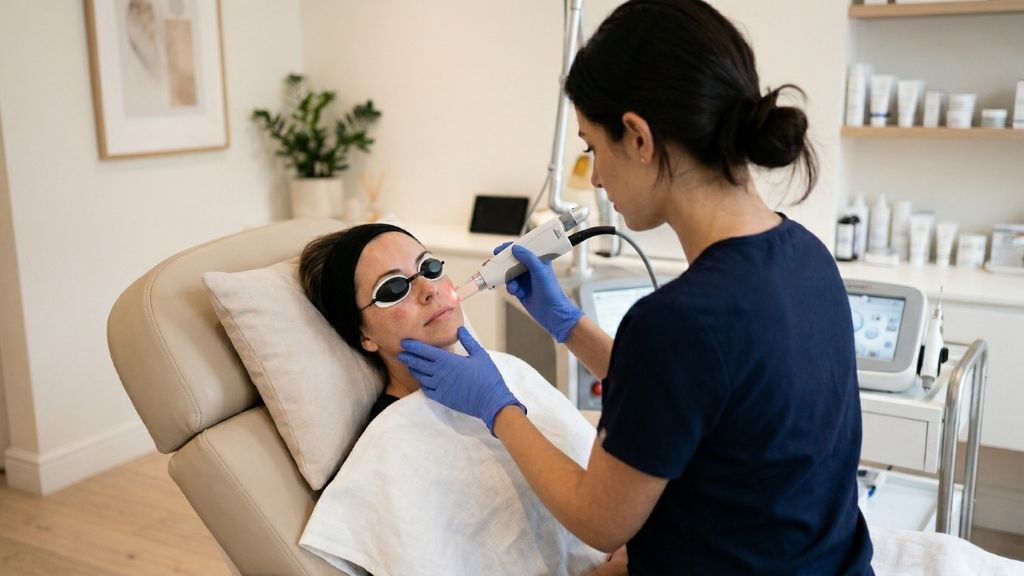
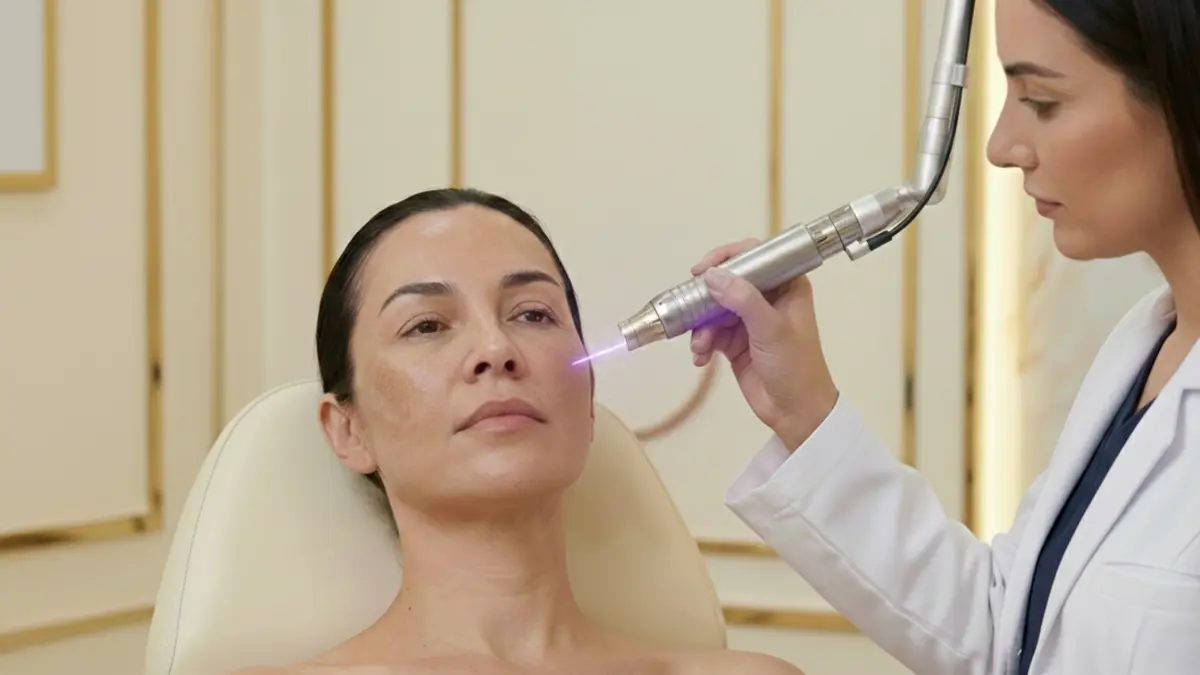
When pico laser energy reaches the deeper layers of the skin, it creates controlled micro-level disruptions without damaging the surface. This signals the skin’s repair system to activate. In response, fibroblast cells ramp up production of collagen and elastin, the two structural proteins responsible for keeping skin firm, smooth, and resilient.

What makes this different from surface treatments is that the rebuilding happens from within. A study published in Lasers in Surgery and Medicine noted measurable improvements in skin texture and tone following picosecond laser treatments, attributed in part to this collagen remodeling response. Over a course of sessions, patients have reported not just clearer skin, but firmer and more even-textured skin overall.

What is Pico Laser Technology?

Pico laser is one of those treatments that sounds more complicated than it actually is. At its core, it delivers ultra-short bursts of laser energy so fast they are measured in picoseconds, which are trillionths of a second.

To put that in perspective, older laser systems worked in nanoseconds. That might not sound like a big difference, but in practice, it means significantly less heat reaching your skin, and less heat means less risk of damaging the surrounding tissue.

So how does it actually work on your skin?

Instead of burning away pigment with heat, pico laser uses what’s called the photoacoustic effect. Essentially, ultra-rapid pulses shatter pigment particles into tiny fragments, and your body’s lymphatic system then clears those out naturally.

It’s precise, it’s controlled, and it is why pico laser is now used across dermatology and aesthetic medicine practices for concerns including pigmentation, acne scarring, uneven skin tone, and overall skin rejuvenation.

How Pico Laser Improves Skin Clarity and Rejuvenation

Pico laser therapy takes a completely different approach compared to your everyday skincare routine. Here’s a closer look at exactly how it works to improve skin clarity and overall rejuvenation.

❖ Breaks Down Stubborn Pigmentation at the Source

Pigmentation is one of the key contributors to uneven skin. If you want skin clarity and a rejuvenated skin finish, you’ll want a solution designed to target pigmentation at the source. This is exactly what pico laser therapy aims to do.

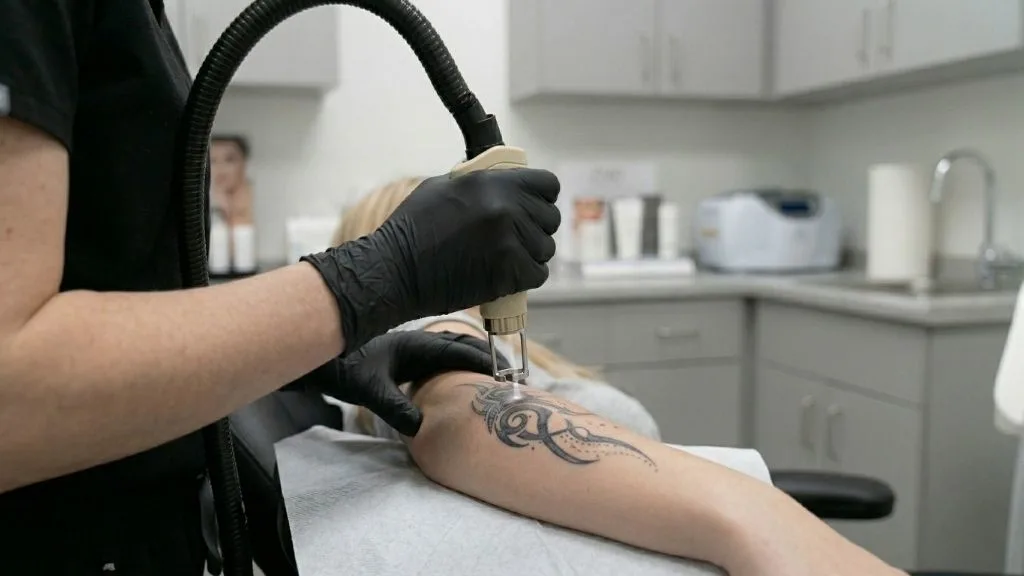
Pigmentation skin issues, including dark spots, melasma, or deep sun damage, often persist because pigment sits deeper within the skin. This deep penetration is why most skincare creams fail to deliver the promised result, as they cannot reach the source. When you book multiple sessions of pico laser for tattoo removal or pigmentation, it targets deeper pigment deposits with precision.

Deeper pigment deposits, the kind that sit beyond the reach of topical products, respond well to this approach because the energy is delivered precisely at the depth where the pigment actually lives. A 2020 review in the Journal of Clinical and Aesthetic Dermatology found that picosecond lasers showed meaningful improvements in melasma and pigmentation with a lower risk of post-inflammatory hyperpigmentation compared to older laser systems, making them a more suitable option for a wider range of skin tones.

❖ Stimulates Collagen for Long-Term Skin Repair

Clear skin is not only about removing spots. It’s also about how smooth and firm the skin appears overall. This is where collagen becomes important. Since pico laser therapy works beneath the surface to create controlled micro-level disruptions, it triggers the skin’s natural repair response.

As your skin starts to heal after a few pico laser sessions, it will naturally produce new collagen and elastin, both of which are essential to maintain skin’s structure and elasticity. Over time, it will lead to a smoother texture, reduced fine lines, and firmer-looking skin.

What makes the pico laser tattoo removal sessions more effective is that this process strengthens the skin from within. So, if you’re planning to receive this skin treatment, many patients have reported not just clearer, but firmer and more resilient-looking skin over time.

❖ Improves Acne Scars by Remodeling the Skin

Acne scars are one of the hardest skin concerns to treat, and if you have tried creams or serums without much luck, there is a real reason for that. Most topical products simply cannot reach deep enough. Acne scarring is not just a surface issue — it involves structural damage to the deeper layers of the skin, which is exactly where those products fall short.

This is where the pico laser works differently. It gets beneath the surface without disturbing the skin’s outer layer, targeting the scar tissue directly. From there, it helps break that tissue down while encouraging the skin to produce new, healthy cells in its place. It’s not covering the problem — it’s working to correct it from within.

Patients who have completed their recommended sessions have reported noticeable improvements in both scar depth and overall skin texture. A study published in Dermatologic Surgery found that picosecond alexandrite laser treatments produced significant improvements in acne scar appearance, with patients and physicians both noting visible reductions in scar depth after a series of sessions. And because the skin is rebuilding itself through its own natural process, those improvements have generally held up well over time.

Pico Laser Therapy: Delivering Gradual, Natural-Looking Results

Whether you are taking pico laser for tattoo removal or to treat pigmentation for clearer skin, you should be aware of this reality. Pico laser does not promise instant transformation—and that controlled, gradual approach is exactly what makes the treatment so safe and effective.

Each pico laser session builds on the previous one, allowing the skin to improve through natural processes. This gradual progression ensures that the results look balanced and realistic rather than artificial or sudden. While patience is required, outcomes have generally trended more stable and longer-lasting over time.

Conclusion

Stubborn pigmentation, acne scars, and uneven texture are not problems that sit on the surface, which is exactly why surface-level products rarely solve them. Pico laser works differently because it addresses the root of the issue, not just what is visible on top.

Results are gradual by design. Each session builds on the last, and the improvements develop through your skin’s own natural repair process. That is what makes them look natural and hold up over time. Patience is part of the process, but for most people, it is worth it.

If you are considering a pico laser and want to know whether it is the right fit for your skin, we would rather show you than just tell you. Book a consultation at ZMD Aesthetics, and we will take a proper look at what is going on with your skin before recommending anything.

Disclaimer

The information provided in this article is intended for general informational purposes only and does not constitute medical advice, diagnosis, or treatment. Results from pico laser therapy vary from person to person. At ZMD Aesthetics, all treatments are performed and overseen by qualified medical professionals. We recommend booking a consultation with our team to determine the most suitable treatment plan for your individual skin concerns

Regret Your Ink? How Pico Laser Tattoo Removal Works Faster

Tattoo regret hits differently when you are actually living with it. You see it every morning, you think about it at job interviews, you cover it at family dinners. It is not a small thing. And you are not alone in feeling it.

According to a 2016 survey by the Harris Poll, nearly 1 in 4 tattooed Americans regret at least one of their tattoos. A 2021 study published in the journal Dermatology found that tattoo removal interest has grown steadily alongside rising tattoo prevalence, with younger adults and women disproportionately represented among those seeking removal. The reasons vary widely: career concerns, a relationship that ended, a design that simply no longer fits who you are.

What has changed in recent years is not the regret itself but what you can actually do about it. Pico laser technology has become one of the most widely used approaches in professional tattoo removal, and for good reason. It works differently from older methods at a physics level, and that difference has real consequences for how your skin responds and how quickly ink fades.

This guide walks through the science honestly, without inflating expectations. It covers how pico lasers actually work, what shapes your results, and what to realistically expect from the process. The goal is to help you walk into a consultation already knowing the right questions to ask.

Why Tattoo Ink Is So Hard to Remove

Understanding removal starts with understanding why tattoos are permanent in the first place. When a tattoo is applied, ink is deposited into the dermis, the deeper layer of skin beneath the surface epidermis. The pigment particles are intentionally large: large enough that the body’s immune cells (macrophages) recognize them as foreign but cannot fully engulf or process them.

This is the biological mechanism behind permanence. The immune system keeps trying to clear the ink, and over decades, this is actually why very old tattoos sometimes appear faded or blurred — slow, partial clearance over time. But left to its own devices, the process is far too gradual and incomplete to produce visible fading in a useful timeframe.

Laser removal accelerates this process by doing what the immune system cannot: breaking the pigment particles into fragments small enough for the lymphatic system to carry away efficiently. How effectively a laser does this comes down largely to pulse duration — and that is where pico technology distinguishes itself.

Nanosecond vs. Picosecond: What the Difference Actually Means

For decades, Q-switched nanosecond lasers were the clinical standard for tattoo removal. A nanosecond is one billionth of a second. These systems work primarily through a photothermal mechanism: laser energy is absorbed by pigment, which heats up rapidly, expands, and fractures. The surrounding tissue inevitably absorbs some of this heat as well.

Picosecond lasers deliver pulses one thousand times shorter — in trillionths of a second. At this timescale, something different happens. Because the energy is delivered so rapidly, there is insufficient time for significant heat transfer to the surrounding tissue. Instead, the dominant mechanism shifts from photothermal to photoacoustic.

The Photoacoustic Effect
When laser energy is delivered faster than thermal relaxation time, the pigment particle experiences a mechanical shockwave rather than simply heating up. This shockwave shatters the particle into significantly finer dust – fragments that the lymphatic system can process more readily.

The practical implication is that picosecond pulses tend to fragment ink into smaller particles per session compared to nanosecond systems. Smaller particles clear more efficiently, which is why many patients and providers observe meaningful fading progression with pico lasers — though it is important to be clear that outcomes still vary considerably between individuals, and no technology guarantees complete clearance.

It is also worth noting that nanosecond lasers are not ineffective – they have decades of clinical use behind them. The comparison is one of efficiency and mechanism, not absolute capability.

The Role of Wavelength: Why Ink Color Matters

Laser energy is only absorbed by pigment that matches its wavelength. Different ink colors absorb different wavelengths of light, which is why tattoo removal has historically been easier for some colors than others.

Black and dark gray inks absorb a broad spectrum of wavelengths and have always been the most responsive to laser treatment. Bright colors – particularly reds, oranges, greens, and certain blues – require more specific wavelengths to be effectively targeted.

Modern picosecond laser platforms typically offer multiple selectable wavelengths (commonly 1064 nm, 532 nm, and 755 nm) to address a wider range of ink colors within a single treatment plan. The appropriate wavelength for a given session is chosen based on the specific pigments present and the patient’s skin tone, since wavelength selection also influences the risk of unwanted pigmentation changes in the surrounding skin.

A general reference by ink color and typical wavelength range:

  • Black / dark gray: 1064 nm (Nd:YAG) — broadly effective
  • Red / orange: 532 nm (KTP) — absorbed by red-spectrum pigments
  • Green / blue: 755 nm (Alexandrite) — targets these stubborn wavelength ranges
  • Multi-color tattoos: often require multiple wavelengths across sessions

This is a simplified overview. Real-world ink formulations vary significantly by manufacturer and artist, and some pigments – particularly cosmetic tattoo inks and certain mixed-color inks – behave unpredictably under laser exposure. A test spot on a small area is sometimes recommended before full treatment of unusual or unknown ink types.

Factors That Influence How Many Sessions Are Needed

Session count is one of the most frequently asked questions – and one of the hardest to answer with precision before treatment begins. The honest answer is that it varies widely, and any provider offering a specific number without a full evaluation should be approached with some skepticism.

The variables that most directly affect session count include:

Ink density and saturation. A heavily saturated professional tattoo with dense pigment layering requires significantly more sessions than a faded amateur piece with minimal ink deposit.

Ink depth. Professional tattoos are typically placed at a consistent depth in the mid-dermis. Amateur tattoos are often shallower or inconsistent in depth, which can make them easier to address in some cases, harder in others.

Tattoo age. Older tattoos have often undergone some degree of natural immune clearance over the years, and the ink particles may already be partially fragmented. This can mean faster visible fading in treatment.

Ink color range. A single-color black tattoo is generally the most straightforward. Multi-color pieces with a wide palette – especially those containing green, light blue, or yellow – take longer and may not fully clear even with multiple sessions.

Skin tone. Deeper skin tones require more conservative laser settings to reduce the risk of post-inflammatory hyperpigmentation or hypopigmentation, which can extend the overall treatment timeline.

Individual immune response. After each session, the fragmented ink is cleared by the lymphatic system. People vary in how efficiently this happens, which is why two people with seemingly identical tattoos can have quite different progression rates.

Spacing between sessions. Most protocols recommend a minimum of 6 to 8 weeks between sessions to allow adequate skin healing and immune clearance. Rushing sessions does not speed results and may increase complication risk.

General published ranges in the clinical literature suggest that many professional tattoos require somewhere between 6 and 12 or more sessions for significant clearance, with simpler pieces often achieving results in fewer. Cosmetic tattoos (permanent makeup) and tattoos containing certain pigments may behave differently and can sometimes be more difficult to clear.

What to Expect During and After a Session

A pico laser tattoo removal session is relatively brief – typically ranging from a few minutes for small tattoos to 30 minutes or more for larger pieces. The laser handpiece is passed over the tattoo in controlled movements, delivering rapid pulses to the ink.

In terms of sensation, most people describe it as a series of sharp snapping sensations – similar to a rubber band against the skin, but quick and repetitive. The speed of picosecond pulses keeps the individual contact time very short. Topical numbing cream applied before the session is a common option, and some providers offer additional comfort measures for sensitive areas.

Immediately after treatment, a phenomenon called “frosting” is commonly observed – a temporary whitening of the skin over the treated area caused by the rapid vaporization of water and release of gas bubbles within the tissue. This typically resolves within 20 to 30 minutes and is considered a normal treatment endpoint, not a complication.

In the hours and days following, redness, swelling, and mild tenderness are expected. Some blistering or crusting may develop as the skin heals – this is a normal part of the process. The treated area should be kept clean and protected from sun exposure during healing.

Visible fading typically becomes apparent over the 4 to 8 weeks following each session, as the immune system gradually clears the fragmented ink. The tattoo will not appear dramatically different immediately after treatment.

What to Expect: Side Effects and How to Handle Them

Pico laser tattoo removal has a well-documented safety profile, and when performed by a qualified provider with appropriate settings, serious complications are uncommon. A 2020 review published in Lasers in Surgery and Medicine found that picosecond lasers showed favorable safety outcomes across skin types. While side effects do occur, they are typically mild, temporary, and a completely normal sign that your immune system is responding to the treatment.

That said, knowing what is normal helps you stay calm and care for your skin properly between sessions. Here is what you might experience and what it actually means.

  • Redness and swelling are the most common reactions and typically settle within a day or two. Think of it the same way you would any minor skin irritation. It is your body responding, not something going wrong.
  • Some blistering or crusting can appear in the days after treatment, particularly on areas with dense ink. This is actually a good sign that the laser did its job. Leave it alone, keep it clean, and let it heal on its own.
  • Temporary skin lightening or darkening around the treated area can occur, especially in people with deeper skin tones. This is usually short-lived and fades over a few weeks to months. An experienced provider will use conservative settings from the start to keep this risk as low as possible.
  • Ink darkening is rare, but worth knowing about if you have cosmetic tattoo work or certain specialty inks. A simple test spot before full treatment is all it takes to rule this out.
  • Scarring is uncommon, but it remains a potential risk with any laser treatment. Following your provider’s aftercare instructions carefully, such as not picking at healing skin, is the best way to support proper healing and minimize this risk.
  • Incomplete clearance happens with some tattoos, particularly those with unusual ink types or very heavy layering. Being upfront about this possibility is part of setting realistic expectations, but for the majority of tattoos, meaningful fading is very achievable.

These risks can be meaningfully reduced – though not eliminated – by choosing a provider with specific experience in laser tattoo removal and by following aftercare instructions carefully between sessions.

When Laser Tattoo Removal Is Not Appropriate

There are specific circumstances in which laser tattoo removal should be postponed or avoided altogether. A thorough intake consultation should address each of these:

Active sun exposure or tan in the treatment area. Sun-tanned skin contains elevated melanin levels that compete with tattoo pigment for laser energy absorption, increasing the risk of skin damage and pigment changes. A minimum of 4 weeks without unprotected sun exposure is generally recommended before treatment.

Photosensitizing medications. Certain antibiotics, retinoids, and other medications increase the skin’s sensitivity to laser energy. Your provider should review your current medications before beginning treatment.

Isotretinoin (Accutane) use. Most providers recommend waiting at least 6 months after completing isotretinoin before laser treatment, due to impaired wound healing associated with the medication.

Active skin infection or open wounds in the treatment area. Treatment should be postponed until the skin has fully healed.

Pregnancy and breastfeeding. Laser treatments are generally contraindicated during pregnancy and breastfeeding as a precautionary measure.

History of keloid or hypertrophic scarring. Patients with a known history of keloid formation carry a higher risk of abnormal scarring from laser treatment and should discuss this thoroughly before proceeding.

Light-triggered seizure disorders. Pulsed light delivery may pose a risk for individuals with photosensitive epilepsy.

Aftercare: Your Role in the Healing Process

Outcomes in laser tattoo removal are not determined solely by what happens during the session. The healing period between sessions – and how well the skin is cared for – meaningfully affects both safety and the rate of visible fading.

Protect from sun exposure. UV light can cause pigment changes in treated skin and impair healing. Broad-spectrum SPF 30 or higher should be applied consistently to the treated area when it is exposed to sunlight, for the full duration of the treatment course.

Do not pick, scratch, or pop blisters. The skin is undergoing a healing response after each session. Disrupting this process – even unintentionally – can introduce infection risk and, in some cases, lead to scarring.

Keep the area clean and moisturized. A gentle, fragrance-free moisturizer helps maintain the skin barrier during healing. Avoid harsh exfoliants or active skincare ingredients (like AHAs or retinoids) on the treated area until it is fully healed.

Support the immune response. The clearance of fragmented ink particles is an immune-mediated process. General health factors – hydration, sleep, and avoiding smoking – are associated with more efficient lymphatic clearance, though individual variation remains significant.

The Consultation: What to Look For and Ask

Not every tattoo removal clinic operates the same way. The equipment differs, the training differs, and the results differ. Knowing what separates a good provider from an average one before you walk in the door saves you time, money, and skin.

So before you commit to anything, here are the questions worth asking out loud.

What laser system do you use, and why?

A good provider will not just name the machine. They will explain the wavelengths it offers, why those wavelengths suit your specific ink colors, and how they plan to adjust settings for your skin. Vague answers here are a real red flag.

Have you worked with my skin tone before?

This one matters more than people realize. Treating deeper skin tones, particularly Fitzpatrick types IV through VI, requires a more careful hand and specific wavelength choices. A clinic that mostly sees lighter skin types may not have the experience to handle yours safely.

How many sessions are we realistically looking at?

Any provider worth your time will give you a range, not a promise. If someone tells you a fixed number without examining your tattoo properly, that is worth questioning. Honest providers will also tell you upfront if full clearance may not be achievable for your particular ink.

Can we do a test spot first?

For unusual ink types, cosmetic tattoos, or anyone with a higher-risk skin profile, treating a small area before the full session is a smart and common precaution. A confident provider will have no hesitation offering this.

At ZMD Aesthetics in Santa Ana, Dr. Zarina Khabibulina brings a board-certified background in family practice and aesthetics to every removal consultation. The process starts with a proper look at your tattoo, your skin type, and your history before any plan is put together. No assumptions, no one-size-fits-all approach.

Summing Up

Pico laser tattoo removal works by delivering ultra-short bursts of laser energy that shatter tattoo pigment into particles small enough for the body to clear naturally. The photoacoustic mechanism, a shockwave effect rather than simple heating, is what differentiates picosecond from older nanosecond systems, and is the primary reason pico lasers tend to be more efficient per session.

That said, complete removal is not guaranteed for every tattoo, and outcomes depend on a range of variables that no laser can fully override: ink type and depth, skin tone, immune response, and the number of sessions a patient is willing to undergo. Going in with calibrated expectations — and a provider who shares them honestly- is the best foundation for a good experience.

Thinking about removal, but not sure where to start? That is exactly what a consultation is for. No pressure, no guesswork  just a straightforward conversation about your tattoo, your skin, and what is actually achievable.

At ZMD Aesthetics, we offer physician-led pico laser consultations where Dr. Zarina Khabibulina will assess your ink, your skin type, and give you an honest picture of what the process looks like for you specifically. We are based in Santa Ana, Orange County, and we see patients Monday through Saturday. Book a Consultation at ZMD Aesthetics

Medical Disclaimer

The information provided in this article is for educational purposes only and does not replace a professional medical consultation. At ZMD Aesthetics, all treatment decisions are made on an individual basis by a licensed physician following a thorough clinical assessment. Outcomes vary depending on skin type, ink composition, tattoo depth, immune response, and other personal health factors. If you are considering laser tattoo removal, we encourage you to schedule a consultation with our team so we can evaluate your specific situation and provide guidance that is appropriate for you.

How to Prepare for Pico Laser Treatment: The Essential 7-Day Checklist

Pico laser treatment is rapidly gaining popularity among women worldwide. If you’re someone who frequently visits aestheticians or dermatologists, you’ve likely heard of this treatment, especially if you have an uneven skin tone or stubborn pigmentation.

Here at ZMD Aesthetics, our Pico lasers are generally used for addressing the appearance of stubborn melasma, clearing post-acne scars, achieving overall skin rejuvenation, and effectively removing unwanted tattoos.

Many women choose this treatment when they’ve tried everything, from skincare products to medicine, but nothing delivered the results they expected. If you’ve also signed up for this treatment for the same reason, you must start preparing your skin at least a week before the scheduled treatment date.

This preparation will give you optimal results. In this blog, we’re sharing the steps to prepare your skin for a pico laser treatment. So, ensure you read the full blog and follow the steps discussed below.

What is Pico Laser Treatment?

If you’re still unsure what pico laser treatment is, it’s a non-invasive skin procedure that uses ultra-short laser pulses to target concerns such as pigmentation, acne scars, and other visible skin challenges.

You can also benefit from this treatment if you have sunspots, dullness, and uneven texture. Instead of relying heavily on heat, the pico laser delivers quick bursts of energy that break down excess pigment and stimulate natural collagen production.

Since the pulses are delivered at an incredibly fast rate, the surrounding skin experiences little to no damage compared to traditional treatments. If you’ve already tried skincare products, chemical peels, or high-end facials but nothing has worked, then a pico laser treatment is worth considering.

Preparing Your Skin for Pico Laser Skin Treatment

Skin preparation is necessary before any laser treatment, but it’s not necessarily complex.

If your pico laser treatment is due in the coming week, we recommend following these steps 7 days preceding the treatment date.

Day 7 – Pause Strong Active Ingredients

Stop using retinoids, glycolic acid, salicylic acid, benzoyl peroxide, and other exfoliating products at least 5 to 7 days before the treatment date.

These ingredients thin and sensitize the outer skin layer, potentially increasing redness and irritation during the procedure. Instead, switch to a gentle cleanser and a simple moisturiser.

Day 6 – Sun Protection Becomes Non-Negotiable

At this point, you should avoid direct sun exposure. If your work involves going outside, then apply a broad-spectrum sunscreen (SPF 30 or higher) before stepping outside.

You can also apply it if you plan to remain indoors because tanned or sunburned skin is reactive and can increase the risk of pigmentation reappearance.

Day 5 – Focus on Hydration

Hydrated skin responds better to laser treatments and also recovers faster. Hence, start drinking more water throughout the day and apply a fragrance-free moisturiser regularly.

Avoid trying any new skincare product on your skin this week to prevent any unwanted skin issues.

Day 4 – Review Medications and Supplements

Make a list of all the medications and supplements you’re taking, and share it with your dermatologist. Certain antibiotics, acne medications, and supplements can increase skin sensitivity or the risk of bruising.

However, don’t stop any medication without your doctor’s approval. Consult both your dermatologist and your general physician for guidance.

Day 3 – Avoid Other Skin Treatments

As the treatment date approaches, stop any other skin treatments. We’re talking about waxing, threading, chemical peels, microdermabrasion, or facials.

These treatments may inflame the skin, making it more vulnerable during laser exposure.

Day 2 – Minimize Alcohol

Alcohol can dehydrate skin and increase sensitivity. Hence, minimize or completely stop the intake of alcohol at least two days before the treatment.

Day 1 – Arrive with Calm, Clean Skin

The night before your scheduled treatment, gently cleanse your skin and apply a fragrance-free moisturiser. Sleep at least 8 hours the night before so you’re well-rested, resulting in calm, stress-free skin the next day.

Aftercare Tips for Pico Laser Treatment

Once you’ve received your first pico laser treatment session, you must be mindful of a few aftercare hacks. Following these can help your skin recover faster and preserve results longer. Before learning about the aftercare techniques, remember that it’s normal to experience mild redness, warmth, or slight swelling on your face.

You may feel mild sunburn-like sensations during or after the treatment. However, remember that it’s temporary and will fade away within hours or a few days. For aftercare, replace a chemical-heavy cleanser with a gentle one. Avoid scrubbing, exfoliating, or using any active ingredients on your skin until your dermatologist allows it.

You can continue applying a hydrating moisturiser to support your skin barrier. Lastly, avoid saunas, steam rooms, and very hot showers for a few days after the treatment, as heat can worsen skin redness.

If your skin flakes slightly, let it shed naturally; don’t pick at it. Women who regularly step outside their homes must prioritize sun protection. Apply a good sunscreen daily for at least two to three weeks after the treatment, and wear a hat for extra protection.

Conclusion

Pico laser treatment is a promising solution for significantly reducing the appearance of acne marks, stubborn pigmentation, dullness, and other complex skin concerns. However, the true secret to optimal results lies in how well you prepare and care for your skin. By following the pre-treatment and aftercare guidance we’ve shared, you’ll ensure your skin stays healthy and responds beautifully to the laser. If you are recommended multiple sessions, staying consistent with these routines throughout your entire treatment journey is key.

At ZMD Aesthetics, we believe that every patient’s skin journey is unique. We don’t just perform treatments; we take a personalized, science-backed approach to understand your specific needs and ensure you get the absolute best out of your Pico laser sessions.

When you choose us, you are choosing physician-led care you can trust. Our practice is guided by Dr. Zarina Khabibulina, a board-certified family practitioner with an extensive background in dermatology and aesthetics. Under her expert direction, our team is dedicated to supporting you through every step of your customized treatment plan, prioritizing your safety, comfort, and a highly rewarding experience.

Are you ready to reveal your clearest, most radiant skin? Book your appointment with us today, and let’s take the first step toward your skin goals together!

Why Pico Laser is Considered a Leading Treatment for Melasma

Melasma can be frustrating to live with, especially for people who are highly conscious about their appearance. The dark patches it creates on the skin can lower some people’s confidence and even put them into extreme emotional turmoil.

For those new to melasma, it’s a skin condition that causes dark, blotchy spots and patches on the skin, particularly on the face and other exposed areas. While the market offers numerous creams and other topical medications for melasma, they don’t always generate the desired results. It is where pico laser treatment can help people.

If you’re dealing with stubborn melasma patches, you must consider pico laser treatment for visible results. We’ve created this comprehensive guide on ‘pico laser for melasma,’ so you’re aware of what you’re opting for. Ensure you read the full blog to gain clarity.

What is Pico Laser Treatment?

Pico laser is a non-invasive skin treatment that uses ultra-short bursts of energy delivered in picoseconds (trillionths of a second) to treat melasma. There are other laser treatments as well, but they rely heavily on heat to destroy pigmentation.

In contrast, a pico laser uses rapid pulses that generate a photoacoustic effect. It means the laser energy shatters pigment particles into tiny fragments without heating or damaging the surrounding skin.

Since melasma involves excess melanin production, breaking pigment into smaller particles allows the body’s natural processes to clear it gradually. It’s why the pico laser for melasma is growing in popularity worldwide.

Who Should Take Pico Laser Treatment?

Since the pico laser is a safe, non-invasive treatment, most people can undergo it after their dermatologists’ approval. Pico laser for melasma is generally recommended for people who

  • Have persistent or recurrent melasma despite using topical creams
  • Have medium to deeper skin tones prone to post-inflammatory pigmentation
  • Have mixed or dermal melasma that is difficult to treat with creams alone
  • Are committed to stricter sun protection and long-term skin care

However, it’s not suited for individuals with active skin infections, uncontrolled hormonal triggers, and certain inflammatory skin conditions. A proper dermatological assessment can help you determine your suitability for this treatment.

Why is Pico Laser Considered the Best Treatment for Melasma?

Now that you’re aware of what the pico laser for melasma treatment exactly is, let’s explore why it has become a preferred option for many dermatologists and patients. Much of its effectiveness and popularity stems from the following reasons.

It Targets Pigment without Excess Heat

One of the biggest challenges in treating melasma is that heat can worsen it. People who take traditional Q-switched laser treatment often complain of rebound pigmentation because this treatment generates significant thermal energy.

Pico laser, by contrast, uses extremely short pulses that rely more on mechanical pressure than prolonged heat. This precision minimizes thermal damage to surrounding skin.

Since melasma-prone skin is highly reactive, reducing heat exposure lowers the chances of triggering further pigment production. This safety profile is one reason why the pico laser for melasma is considered the best available treatment.

Breaks Pigment into Finer Particles for Better Clearance

The ultra-short pulse duration applied during treatment allows the pico laser to fragment melanin into much smaller particles than traditional lasers. The body’s immune system can easily clear these smaller particles more efficiently.

It leads to gradual skin lightening without aggressively stripping the skin. For many patients, this results in more even-toned fading rather than patchy improvements. Once you complete the recommended number of pico laser sessions, you can notice increased brightness and a reduction in stubborn pigmentation.

Lower Risk of Post-Inflammatory Hyperpigmentation (PIH)

People with medium to deeper skin tones, especially those living in sunny regions, are more prone to post-inflammatory hyperpigmentation (PIH). Even minor irritation can lead to darker patches.

Since the pico laser for melasma delivers significantly less thermal energy than traditional laser treatments, the risk of PIH is reduced when performed correctly. This makes it particularly suitable for Fitzpatrick skin types III to V. While no laser is entirely risk-free, pico laser’s gentler approach makes it safer for pigmentation-prone skin.

Gradual, Controlled Results Reduce the Risk of Rebound

Melasma tends to relapse if treated too aggressively. Hence, if you’re considering treatments that produce rapid, intense peeling or inflammation, then you should not overlook the risk of rebound hyperpigmentation.

A highly effective way to help prevent rebound pigmentation is to choose a treatment that provides gradual pigment reduction over a series of sessions spaced weeks apart. It is exactly what the pico laser for melasma treatment does. This controlled approach helps reduce sudden inflammatory responses.

Conclusion

Melasma is more than just a cosmetic concern; for many, it is an emotional burden that can weigh heavily on self-esteem. But you do not have to settle for masking the problem or relying on topical creams that offer little to no relief.

As we have explored, Pico laser technology represents a significant breakthrough in pigmentation treatment. By shattering pigment with significantly fewer risks than those associated with high thermal energy, it offers a generally safer, highly effective path to clarity—especially for those who have struggled with the “rebound effect” of traditional lasers.

However, state-of-the-art technology is only as good as the experts guiding it. Treating melasma requires a nuanced, customized approach to ensure safety and long-term results.

At ZMD Aesthetics, we specialize in advanced pigmentation management and understand the complexities of treating stubborn melasma. We invite you to book a personalized consultation with our team today. Let us assess your skin and design a treatment plan tailored specifically to restore your natural radiance.

We do not accept insurance. We accept Cash, MasterCard, Visa, AmEx and Financing available through Cherry.