
The "Mask" That Won't Wash Off: What Orange County Sun Is Quietly Doing to Your Skin
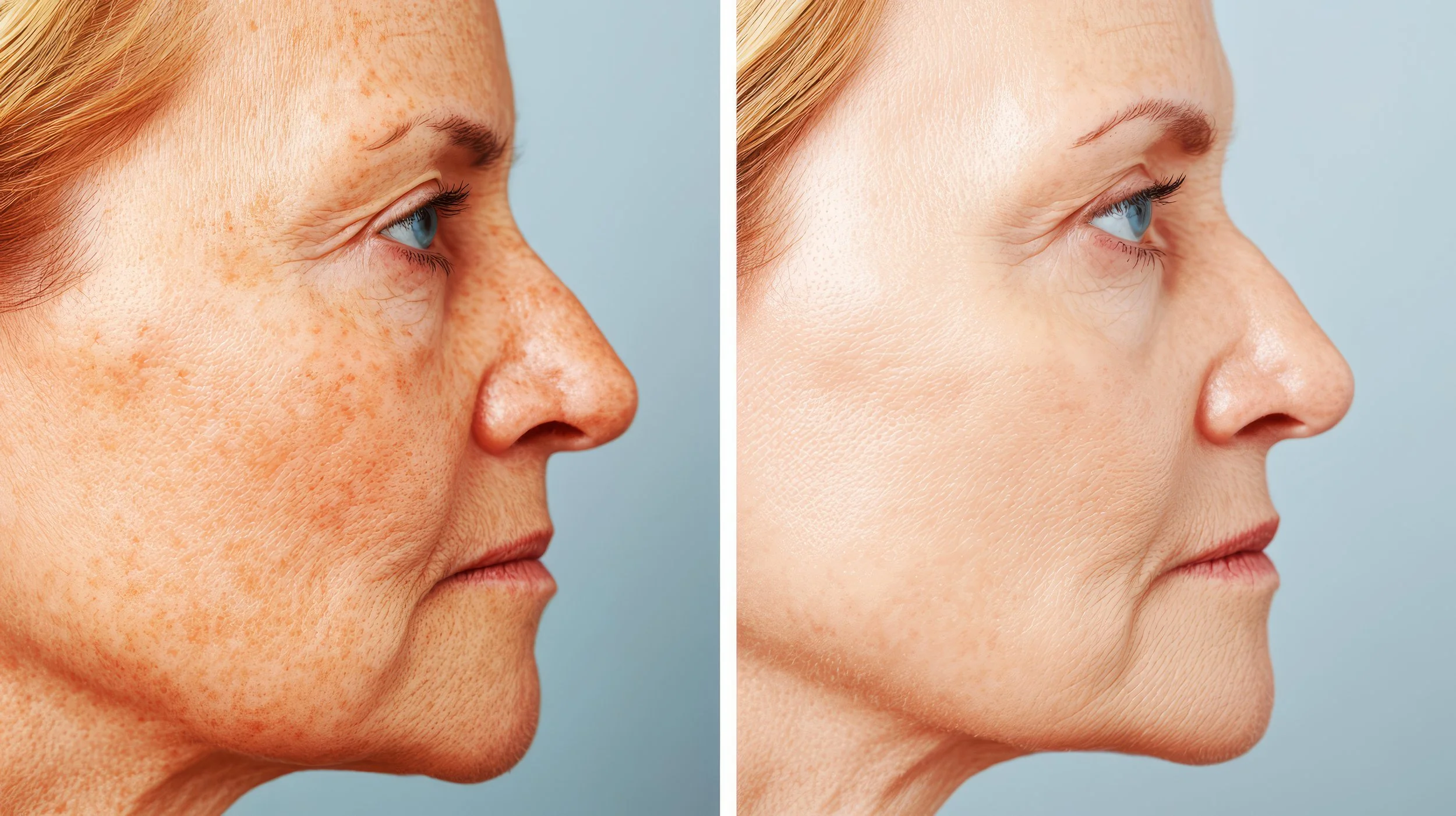
You've tried the scrubs. The brightening serum. The vitamin C everyone swears by. And still, those brownish patches across your cheeks, upper lip, or forehead sit there — a little worse every summer, completely unbothered by anything you do at home. If it feels like a mask that won't wash off, there's a reason: what you're looking at probably isn't a stain on the surface. It's deep pigmentation, and it plays by different rules.
What this stubborn pigmentation actually is
This kind of pigmentation is a form of hyperpigmentation where the skin overproduces melanin in patches — usually symmetrical, usually on the cheeks, upper lip, forehead, or bridge of the nose. It's driven by a mix of triggers: UV exposure, heat, and hormones (pregnancy, birth control, and perimenopause are common culprits).
The key thing to understand: this pigment sits deeper and far more stubbornly than a freckle or a post-acne mark. It isn't dirt, it isn't poor skincare, and it isn't something you scrub away. It's a condition you manage.
Why Orange County makes pigmentation worse
Deep pigmentation feeds on sun and heat — and Orange County offers both, year-round. It's not just beach days. It's the reflected light off the water and pavement, the heat itself, and the UVA that pours through your car window on every drive up the 5. This kind of discoloration is triggered by UV light, visible light, and heat, which is exactly why it's so persistent in Southern California, and why it flares every summer no matter how careful you were the rest of the year.
Deep pigmentation vs. ordinary sun spots
This distinction matters more than most people realize, because it changes what you should — and shouldn't — do.
Ordinary sun spots and post-acne marks tend to be discrete, individual spots, and they usually respond fairly well to brightening and gentle resurfacing. The deep, hormone-linked kind of pigmentation is diffuse, symmetrical, and prone to coming back. Crucially, it can be worsened by treatments that clear ordinary spots — aggressive lasers and harsh peels can cause it to rebound darker. So getting the read right is the whole game.
Why your brightening serum isn't fixing it
Surface products can help maintain and support results, but they rarely clear deep pigmentation on their own — and some of the harsher "fade fast" actives can actually aggravate it. This is where at-home experimentation often backfires: people push stronger and stronger products, the skin gets irritated, and irritation itself triggers more pigment. More aggressive is not better here. Gentler and consistent wins.
What actually helps — gentlest first
Daily defense (non-negotiable)
Nothing else holds without this. A broad-spectrum SPF that also shields against visible light (look for iron oxides / tinted mineral formulas), reapplied through the day, plus hats, sunglasses, and even UV window film for your car. This single habit does more for pigmentation than any treatment.
Targeted topicals
Ingredients like tranexamic acid, azelaic acid, vitamin C, and gentle retinoids can help calm pigment production over time — used measuredly, not aggressively.
In-clinic options (conservative, expert hands)
Certain gentle peels and carefully chosen, low-energy device settings can lighten pigmentation — but only in experienced hands, because the wrong setting makes it worse. This is one area where a conservative approach and FDA-approved equipment matter more than almost anywhere on the face.
Managing, not "curing"
Here's the honest part: this kind of pigmentation is usually managed, not cured. The realistic goal is meaningful lightening and fewer flares, maintained over time — not a one-and-done erasure. Anyone promising to make it vanish forever is overselling.
What realistic progress looks like
Gradual lightening, calmer skin, and fewer summer flares — held in place by sun discipline. Slow and steady genuinely beats fast and aggressive here, because the aggressive route so often rebounds.
And to be clear: pigmentation isn't a hygiene problem or something you did wrong. It's a common, stubborn, sun-and-hormone-driven condition that responds best to patience and the right, conservative plan.
